 Home
HomeIn his book 1776 David McCullough presents a very interesting narrative of the American Revolution’s most volatile year. It is a story of muddy roads, freezing winters, catastrophic defeats, and narrow escapes.
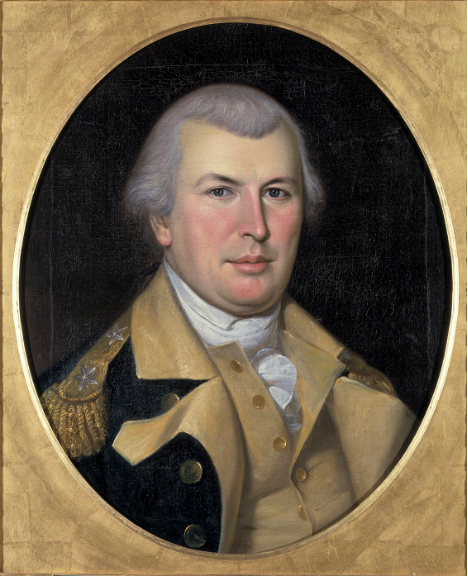
But beneath the tactical maneuvers and political anxieties lies the story of human character: Nathanael Greene, the young Rhode Island general who rose from obscurity to become George Washington’s most trusted confidant.
Even though McCullough’s work provides a secular account of history, this article proposes an interesting perspective to those readers versed in Freemasonry's teachings, an interpretation of Nathanael Greene's experiences throughout 1776 as an allegorical reflection of Masonic principles. While there is no definitive evidence that Nathanael Greene was a Freemason, he did associate directly with members of the Craft and exhibited the character traits that Freemasons value and respect, making this comparison compelling.
Shaping the Rough Ashlar
In Freemasonry, one of the most enduring symbols is the Ashlar—the stone used in building.
The Rough Ashlar represents a person in their raw, natural state: unpolished and uneducated. While the Perfect Ashlar represents a person who, through education, self-discipline, and a dedication to virtue, has been shaped into a stone fit to support a grand temple.
purposeful)
In the opening chapters of 1776, McCullough introduces Nathanael Greene was a 33-year-old Rhode Island iron foundry worker raised in a strict, rural Quaker household. He had a stiff, lifelong childhood limp, suffered from debilitating asthma, and possessed zero formal military education.
To the aristocratic officers of the era, Greene was completely unrefined, a good example of a Rough Ashlar. But Greene possessed a relentless drive for self-improvement. He amassed a private library, devouring books on military tactics, philosophy, and history. By the time the war erupted, Greene had chipped away at his own limitations.
He transformed himself from a humble laborer into the youngest Major General in the Continental Army—a great example of the Masonic duty of self-perfection.
Meeting "On the Level" Amidst Regional Bigotry
One of the most surprising revelations in 1776 is the sheer amount of hatred and division within the American ranks. New Englanders despised Southern aristocrats, Pennsylvanians mocked rural militias, and the army was constantly on the verge of splintering from regional prejudice.
How did a fragmented army of strangers hold together? Our assumption resides in the Military (or Traveling) Lodges that operated within the army camps. Inside these lodges, a foundational Masonic rule applied: "We meet upon the level." Within them, military rank and social class were temporarily set aside.
Although historical records do not confirm that Nathanael Greene was himself a Freemason, his leadership style and personal ethics embodied this exact spirit.
Coming from a background that valued humility and practical virtue, Greene displayed an exceptional ability to evaluate men based on their character and merit rather than their geographic origin or social standing.
Greene worked closely alongside prominent Freemasons—most notably General George Washington—and demonstrated the same commitment to fraternity and unity that defined the Continental officer corps. In a time when regional factionalism could easily have doomed the cause, Greene’s approach allowed him to overcome provincial biases, treat officers and enlisted men with fairness, and build the trust required to hold a diverse army together.
Whether through direct exposure to Masonic colleagues, the influence of these Military Lodges or an innate sense of egalitarian duty, his conduct proved that unity and mutual respect were essential to surviving the trials of 1776.
Trusting in "Providence" on the Delaware
By December 1776, the American cause was on life support. The army was in a state of desperate retreat across New Jersey, tracking blood into the snow with bare feet. Military logic dictated that the revolution was over.
Yet, Washington and Greene decided on a desperate, legendary gamble: crossing the icy Delaware River on Christmas night to attack the Hessian garrison at Trenton.
Throughout the letters and journals quoted by McCullough in these final chapters, Greene and his fellow officers repeatedly invoke the word "Providence"—a concept that resonates with Freemasons, and reflecting the Grand Architect’s divine cosmic plan.
"Let us rely on the goodness of the Cause, and the aid of the supreme Being..."
— George Washington, General Orders (as cited in 1776)
For Greene, the crossing was a physical manifestation of faith. Masonry teaches that a just and moral cause, pursued by men of virtue and fortitude, will be sustained by a higher power. Perhaps that is what happened when the ragged Continental Army emerged victorious at Trenton and Princeton.
The Takeaway
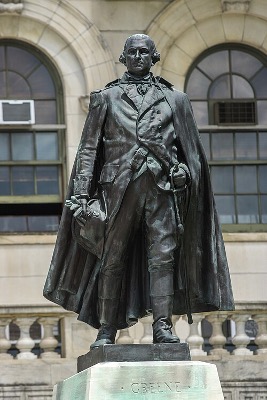
Indirectly David McCullough’s 1776 presents an interesting study in the building of character. Nathanael Greene's journey through that crucible year is a good example that great leaders are built, squared, and polished through struggle, accountability, and an unshakeable faith in a higher purpose.